
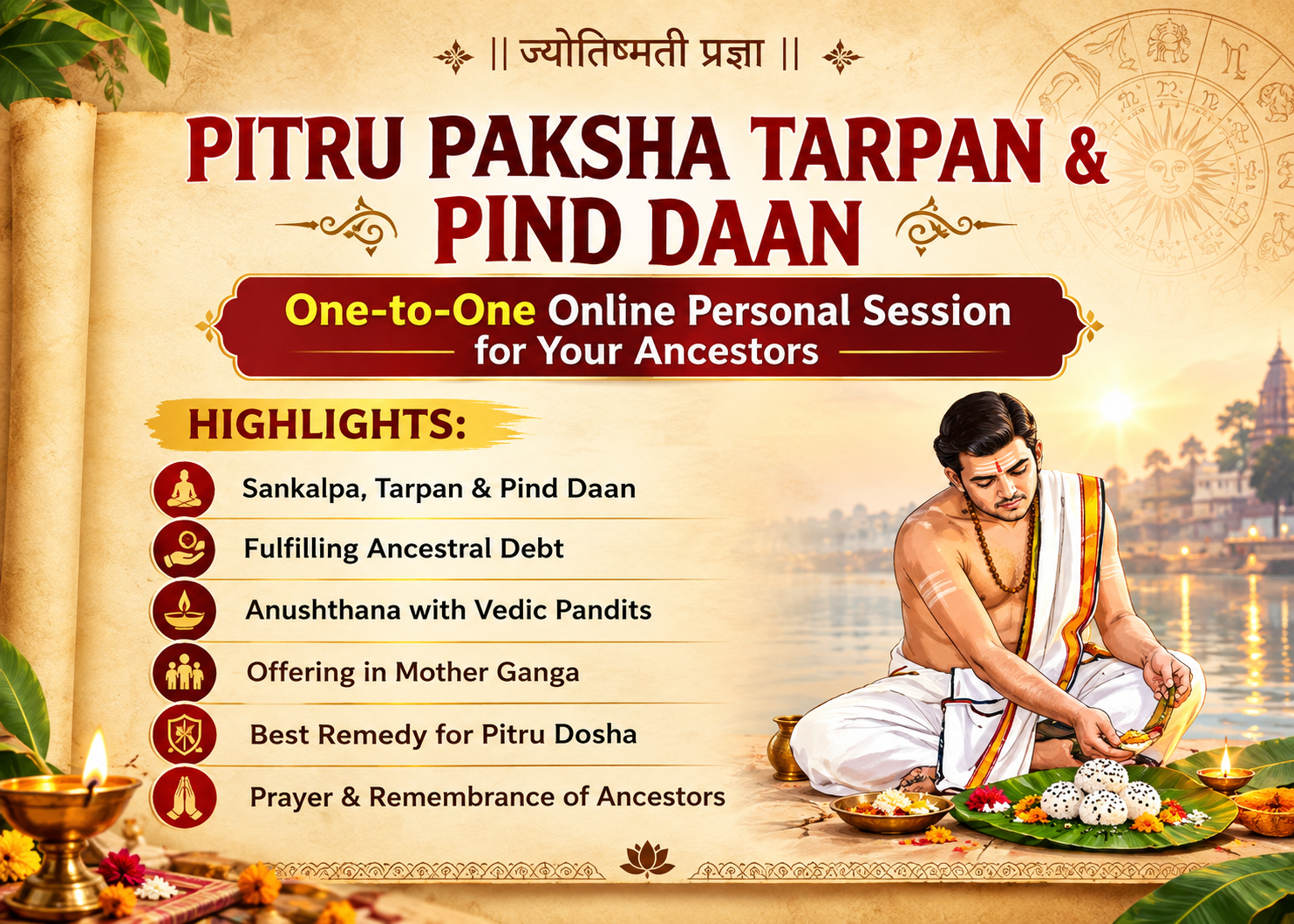
Why This Program?
The idea behind Tarpan is contained in the word itself — “Tṛpti”, satisfaction or contentment. Water is offered with remembrance, mantra and Sankalpa to honour the Pitṛs. Piṇḍa Dāna represents another important part of the ancestral tradition, where the offering is made with the name, lineage and intention connected with the departed ancestors.
This is not simply a ritual performed out of fear. It is an act of Smaraṇa — remembrance, gratitude and continuity of the family lineage.
The Bhagavad Gītā itself preserves the importance attached to Piṇḍa and Udaka, the traditional offerings of food and water to the ancestors:
“सङ्करो नरकायैव कुलघ्नानां कुलस्य च।
पतन्ति पितरो ह्येषां लुप्तपिण्डोदकक्रियाः॥”
— Bhagavad Gītā 1.42
The important expression here is “Piṇḍodaka Kriyā” — the offering of Piṇḍa and water connected with the ancestors. This shows how deeply the remembrance of Pitṛs was connected with the preservation of family Dharma.
THE MAHABHARATA ON SHRADDHA AND THE PITRIS
The Anuśāsana Parva of the Mahābhārata contains an extensive discussion between Bhīṣma and Yudhiṣṭhira regarding Śrāddha and duties towards the Pitṛs. It describes offerings made with attention and faith, including sacred water and Piṇḍa offered for the father, grandfather and great-grandfather.
Another passage in the Anuśāsana Parva connects the offering of Piṇḍa with fulfilling the obligation towards the ancestors and speaks directly about becoming free from the debt owed to the Pitṛs.
This gives us an important understanding of Pitṛ Ṛṇa. It should not be understood merely as some mysterious punishment coming from ancestors. Pitṛ Ṛṇa is also our recognition that our life did not begin with us. We are standing at the present end of a very long chain of human lives.
Our Gotra itself reminds us that we belong to a stream which existed long before our individual birth.
PITRU YAJNA — REMEMBERING THOSE WHO CAME BEFORE US
Sanātana Dharma does not teach us to worship only what is visible today. It teaches us to remember the source.
Deva Yajña remembers the cosmic forces that sustain life. Ṛṣi tradition remembers those who transmitted knowledge. Pitṛ Yajña remembers the human lineage through which we received this birth.
Therefore, during Pitru Paksha we do something very simple but profound: we stop thinking only about “my life” and remember “my lineage.”
A person may know the names of three generations. Another may know only the name of his father or grandfather. Many people may not even know the names of earlier ancestors. Still the tradition gives methods of remembering the known as well as unknown ancestors belonging to the family lineage.
FOR PEOPLE WHO CANNOT TRAVEL
Many families wish to visit sacred places during Pitru Paksha but cannot do so. Some are elderly. Some live outside India. Some cannot leave their work. Some do not know where to go or whom to approach. And some have never learned the procedure from their family.
Distance should not become the only reason for completely forgetting the ancestors.
Through Sankalpa and proper guidance, you can participate from your home while the ritual procedure is conducted by our Vedic Pandits and the final offering is taken to Gangā.
THIS IS NOT ABOUT FEAR OF PITRU DOSHA
We do not want people to perform Pitṛ Karma because somebody frightened them by saying that every difficulty in life is caused by “Pitru Dosha.”
That is not the purpose of this Anushthana.
Pitru Paksha is primarily about Dharma, remembrance and gratitude.
Whether our ancestors left us wealth or struggle, happiness or unfinished responsibilities, we still received this human body through the lineage. Performing Tarpan and Piṇḍa Dāna is therefore a way of saying:
“We remember you. We acknowledge what came before us. And with respect, we continue the lineage.”
That itself is a very powerful understanding of Pitṛ Yajña.
WHAT IS INCLUDED
The Pitru Paksha Anushthana includes personal coordination by our office for collecting the required family and ancestral details, preparation of the Sankalpa, a dedicated one-to-one Zoom ritual session with our Vedic Pandit, Tarpan for the ancestors, Piṇḍa Dāna and other relevant ancestral rites according to the applicable traditional procedure, followed by the offering of the Piṇḍa in the sacred waters of Mother Gangā.
Dakshina: ₹4,999
After registration, our office will personally contact you and collect all details necessary for the Sankalpa, Tarpan and Piṇḍa Dāna.
PITRU PAKSHA — DO NOT ONLY REMEMBER THE DEAD, REMEMBER YOUR ROOTS
There is a beautiful lesson hidden inside Pitru Paksha.
We spend most of our life thinking about the future - career, money, children, success and security. But for these few sacred days Dharma asks us to turn around and look behind us.
- Who carried the family before we arrived?
- Who struggled so that the next generation could exist?
- Whose decisions, sacrifices, mistakes, blessings and samskāras eventually reached us?
- Pitru Paksha reminds us that we are not isolated individuals. We are one link in a much longer chain.
- Tarpan is therefore more than offering water.
- Piṇḍa Dāna is more than offering Piṇḍa.
- Śrāddha is more than performing a ceremony.
- The heart of all three is Śraddhā — remembrance performed with sincerity, responsibility and respect.
This Pitru Paksha, if circumstances have prevented you from performing Tarpan and Piṇḍa Dāna for your ancestors, you may join our personal Pitru Paksha Anushthana.
- Remember your ancestors.
- Offer with Śraddhā.
- Fulfil Pitṛ Yajña with dignity.
Pitru Paksha Tarpan & Pind Daan
One-to-One Online Session with Vedic Pandits
Personal Sankalpa • Tarpan • Pind Daan • Pitru Rituals • Offering in Mother Ganga
Dakshina: ₹4,999
After registration, our office will personally coordinate with you for all necessary details.