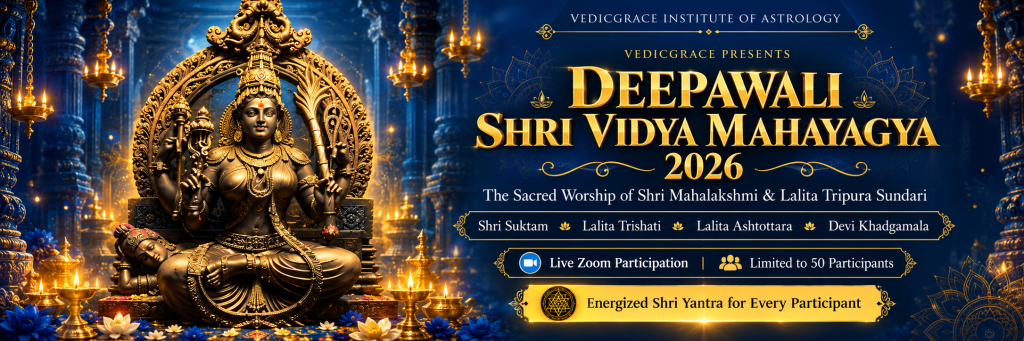
Deepawali Shri Vidya
Mahayagya 2026
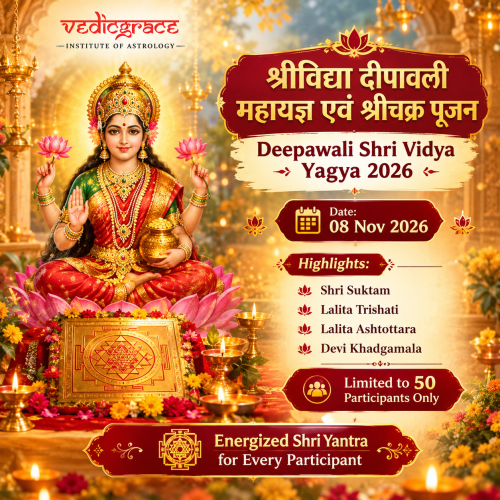
श्रीविद्या दीपावली महायज्ञ एवं श्रीचक्र पूजन - A Sacred Offering to Shri Mahalakshmi and Lalita Tripura Sundari. For Shri, Saubhagya, Samriddhi, Auspiciousness and Spiritual Well-being.
Shri Suktam • Lalita Trishati • Lalita Ashtottara • Devi Khadgamala
Presented by Vedicgrace
Occasion:
Deepawali 2026 - Lakshmi Puja falls on Sunday, 8 November 2026. Once all 50 places are reserved, registration for this Anushthana will close. Live Online through Zoom
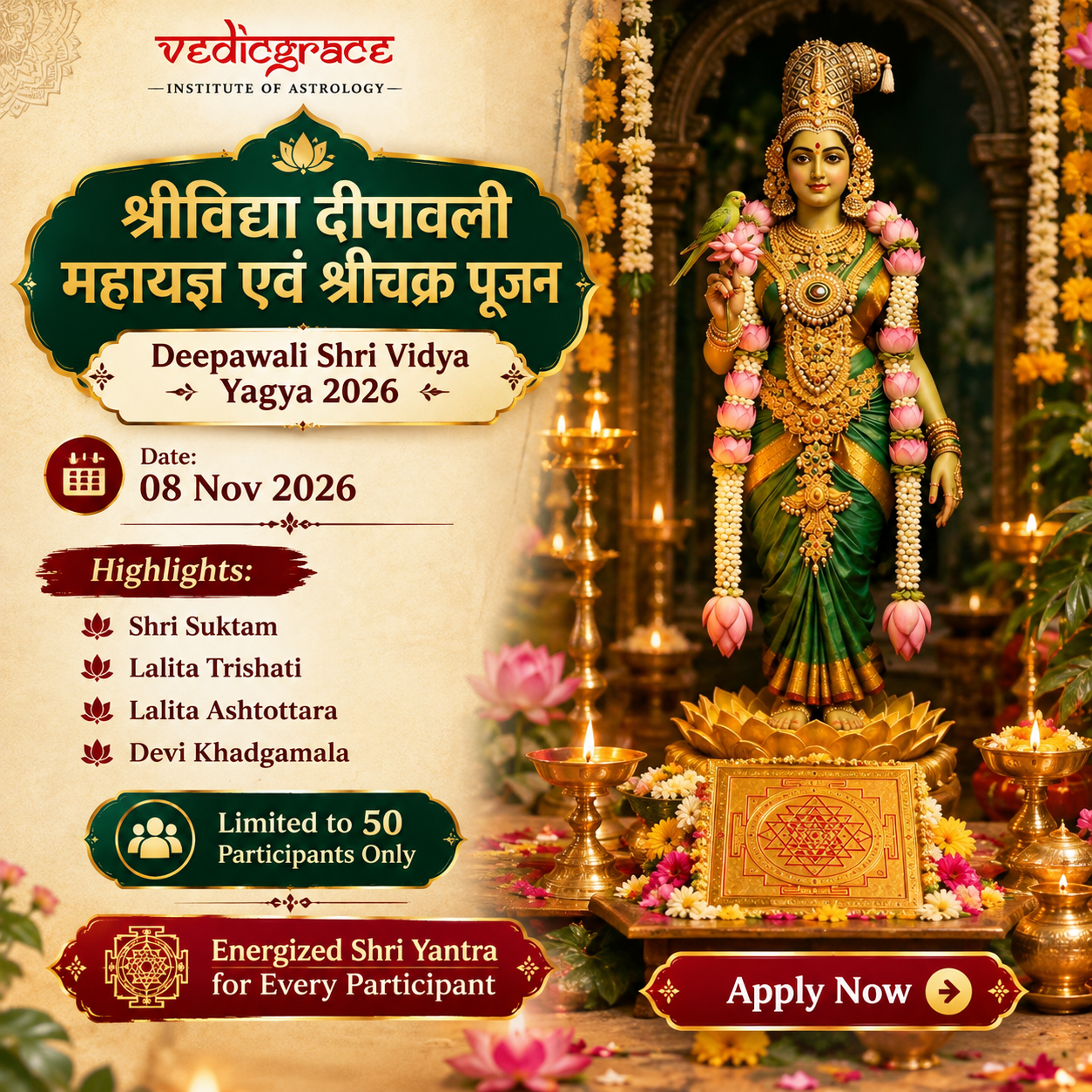
श्रीविद्या दीपावली महायज्ञ एवं श्रीचक्र पूजन
Deepawali Shri Vidya Yagya
This Deepawali, Worship Not Only the Light of Wealth, but the Divine Source of Shri. Every Deepawali, millions of lamps are lit, homes are decorated, and Goddess Mahalakshmi is worshipped with the prayer that happiness, wealth and prosperity should enter our lives. But there is a deeper spiritual understanding of Shri, preserved in the sacred traditions of Devi Upasana. In the Vedic tradition, Shri is not limited to money or material comforts. Shri also represents abundance, nourishment, good fortune, dignity, beauty, harmony and the ability to enjoy prosperity with wisdom. In the Shri Vidya tradition, the Divine Mother is worshipped as Shri Lalita Maha Tripura Sundari, whose sacred presence is contemplated through mantra, yantra and the worship of Shri Chakra. This Deepawali, Vedicgrace invites you to participate in a traditional Shri Vidya Mahayagya, performed by experienced Vedic Pandits who are themselves dedicated practitioners of Shri Vidya Upasana.
Only 50 Participants will be Accepted for This Anushthana
Every registered participant will also receive a Shri Yantra, ritually worshipped and energized during the Puja and Yagya. This is an invitation to celebrate Deepawali through the worship of the Divine Mother and the deeper meaning of Shri.
What Is Shri Vidya? Understanding the Sacred Wisdom of the Divine Mother
Shri Vidya is a traditional path of Shakti Upasana in which the Supreme Divine Mother is worshipped as Shri Lalita Tripura Sundari, also revered as Rajarajeshwari and Mahatripurasundari. The word Shri represents auspiciousness, prosperity, radiance and divine grace. Vidya means sacred knowledge or wisdom. Together, Shri Vidya points towards the wisdom through which the seeker approaches the Divine Mother, not simply for worldly comforts, but also for purity of mind, right understanding and spiritual awakening. One important teaching of Shri Vidya is that material life and spiritual life need not be treated as enemies. Wealth, family, responsibility and worldly activity can also become part of a Dharmic life when guided by wisdom.
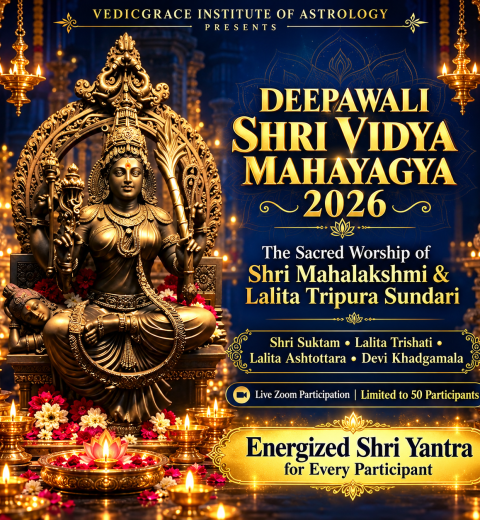
The tradition gives special importance to three principles: Mantra, Yantra and Upasana. Mantra is the sacred sound through which the deity is invoked and contemplated. Yantra provides a sacred geometric form for worship and meditation. Upasana is the disciplined practice through which the devotee develops a closer relationship with the deity. Shri Chakra occupies a central place in this worship. Its nine Avaranas, or enclosures, are associated with different manifestations and powers of the Divine Mother. The worship of Shri Chakra is therefore much more than a prayer for financial gain. It represents a movement from outward desire towards inner understanding.
Some practices of Shri Vidya are traditionally received only through Guru Diksha. For this reason, the specialized ritual chanting and worship in this event will be performed by experienced Shri Vidya Upasaka Pandits. Participants will join through devotion, prayer and Sankalpa. No prior initiation is required simply to attend the online Yagya.
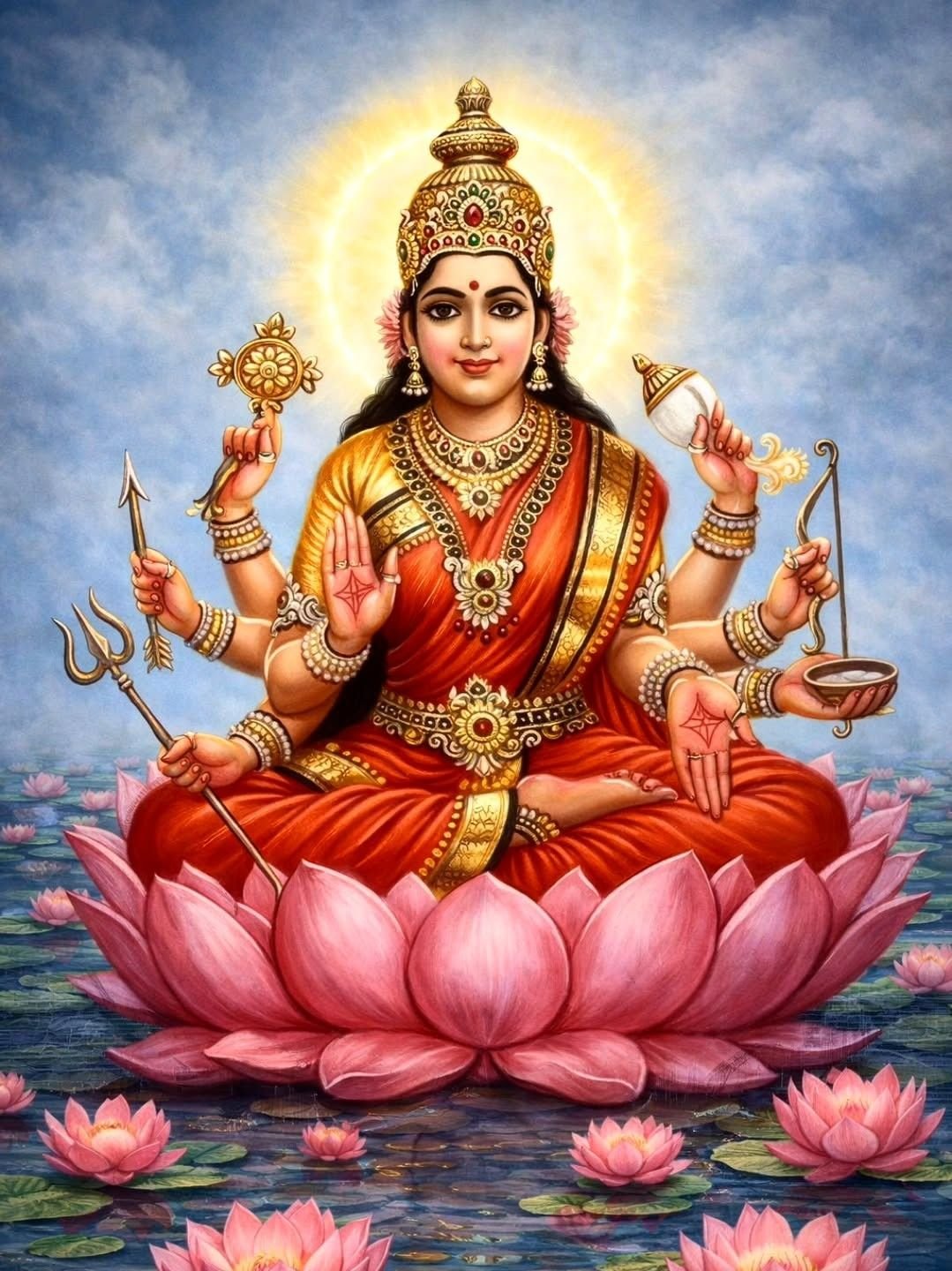
Why Perform Shri Vidya Puja and Yagya During Deepawali?
Deepawali is widely celebrated as the festival of lights and the auspicious occasion for the worship of Goddess Mahalakshmi. Its deeper message is the movement from darkness to light, ignorance to wisdom, and disorder to auspiciousness.
The Amavasya associated with Deepawali has a special place in Lakshmi worship across many Hindu traditions. Homes and places of business are prepared, lamps are lit, and prayers are offered for a life supported by Dharma and prosperity. But Shri Vidya reminds us of something important. We often pray for the arrival of Lakshmi. Yet we must also prepare ourselves to receive prosperity wisely, protect it responsibly and use it for meaningful purposes.
The worship of Lalita Tripura Sundari brings attention to the Divine Mother as the source of wisdom, grace and inner fulfilment. In this Mahayagya, the Vedic worship of Shri Mahalakshmi through Shri Suktam is brought together with devotional recitations from the Shri Vidya tradition dedicated to Lalita Tripura Sundari.
The purpose is to pray for auspiciousness in both the external and internal dimensions of life.
For a householder, this may mean the prayer for family harmony, stable livelihood and peace. For a businessperson, it may mean the desire for ethical prosperity, clarity in decisions and protection from harmful habits. For a spiritual seeker, it may mean a deeper connection with the Divine Mother and the Guru Parampara. These are traditional prayerful intentions, not promises that a ritual will produce a particular material result.
Four Sacred Recitations of the Deepawali Shri Vidya Mahayagya
श्रीसूक्त जप एवं होम
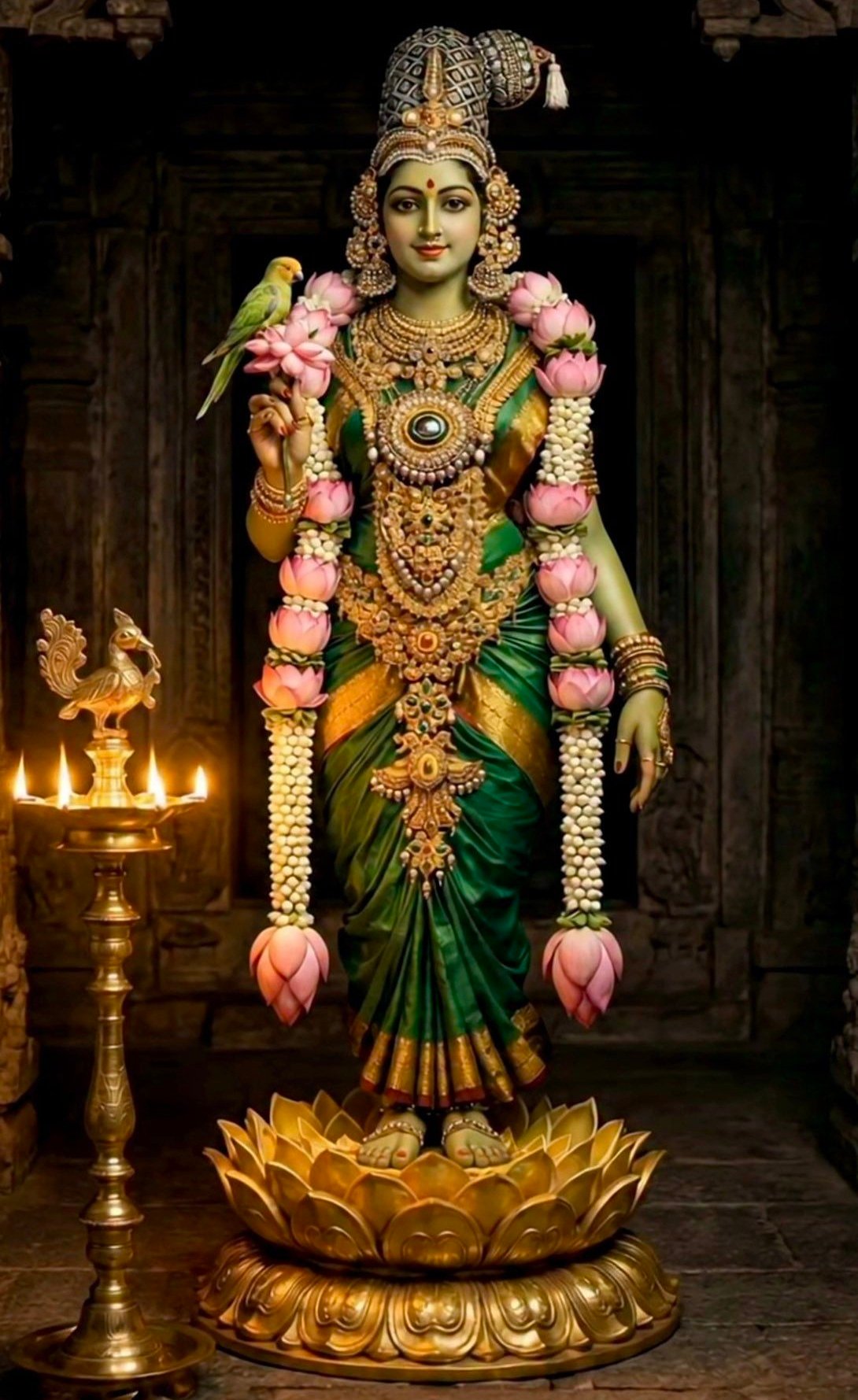
1. Shri Suktam Jaap and Yagya — Invocation of Shri Mahalakshmi
Shri Suktam is among the most revered Vedic hymns dedicated to Goddess Shri Mahalakshmi. It is preserved in the Khila tradition associated with the Rigveda and is widely used in Lakshmi Puja, homa and other auspicious ceremonies.
The hymn invokes Shri as the divine power associated with abundance, nourishment, radiance, prosperity and good fortune. Its prayers mention gold, cattle, grain, reputation and other forms of prosperity that supported a flourishing household and society in Vedic times.
These images remind us that prosperity was understood as something broader than the possession of money. Shri Suktam also contains prayers relating to the removal of Alakshmi, which represents poverty, misfortune, lack of nourishment and inauspiciousness.
In this Anushthana, Shri Suktam will be recited with traditional Vedic pronunciation and accompanied by sacred offerings into the Yagya Agni.
The devotees may offer their Sankalpa for stable livelihood, household well-being, righteous prosperity, peace and the ability to use wealth wisely. The deeper teaching: Shri is not simply the wealth that enters our home. It is also the auspicious quality that helps wealth support a meaningful life.
श्रीललिता त्रिशती जप एवं पूजन
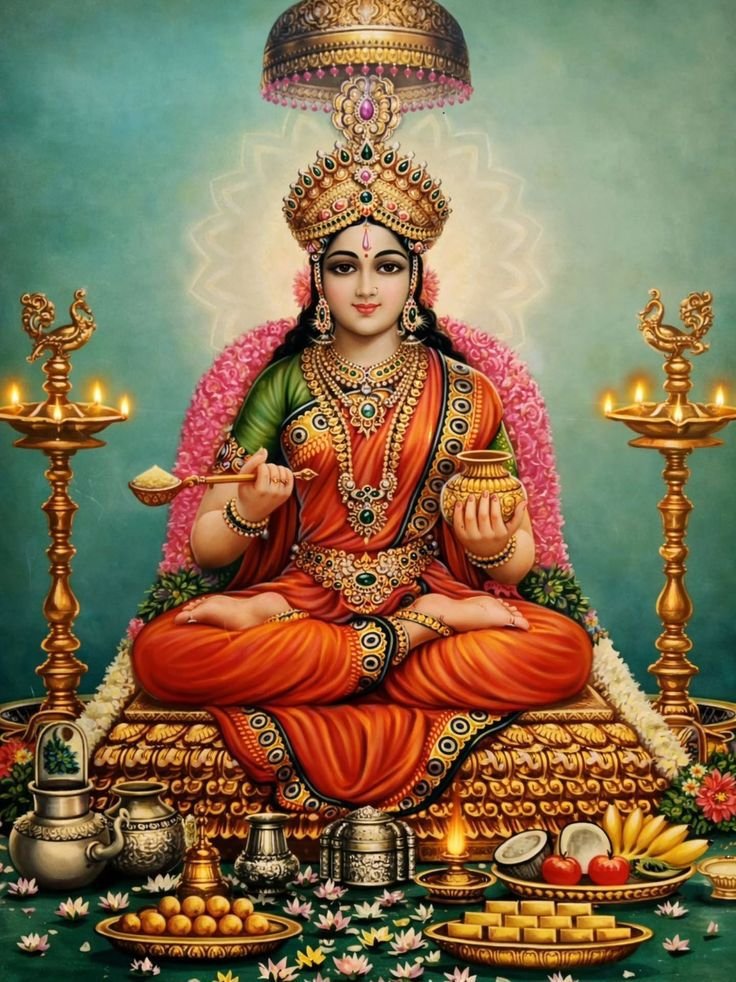
2. Shri Lalita Trishati Jaap and Worship - The 300 Sacred Names of Divine Mother
Among the revered compositions of Shri Vidya is Shri Lalita Trishati, the sacred hymn containing 300 names of Goddess Lalita Tripura Sundari. The traditional narration of Lalita Trishati is found in the Lalitopakhyana section of the Brahmanda Purana, within the dialogue between Lord Hayagriva and Sage Agastya. According to this tradition, Sage Agastya receives the sacred teaching from Hayagriva, revealing the importance of the Divine Mother's names and their connection with Shri Vidya. These 300 names are not merely a description of the Goddess's physical beauty.
They express aspects of her divine nature, consciousness, auspiciousness, compassion and spiritual power. The names also have a special relationship with the mantra tradition of Shri Vidya, which is preserved and explained through Guru Parampara. During this Deepawali Anushthana, Lalita Trishati will be recited and worshipped by the Shri Vidya Upasaka Pandits following their authorized tradition. Devotees may pray for wisdom, clarity, auspicious relationships, strength in fulfilling family responsibilities and the grace to live with greater awareness.
The deeper teaching: Shri Suktam helps us understand the prayer for abundance. Lalita Trishati turns our attention towards the wisdom and divine consciousness through which abundance is understood.
श्रीललिता अष्टोत्तरशतनामावली पूजन
3. Shri Lalita Ashtottara Shatanamavali — Worship through 108 Divine Names
The number 108 holds an important place in Hindu worship, particularly in Japa, Archana and Namavali recitation.
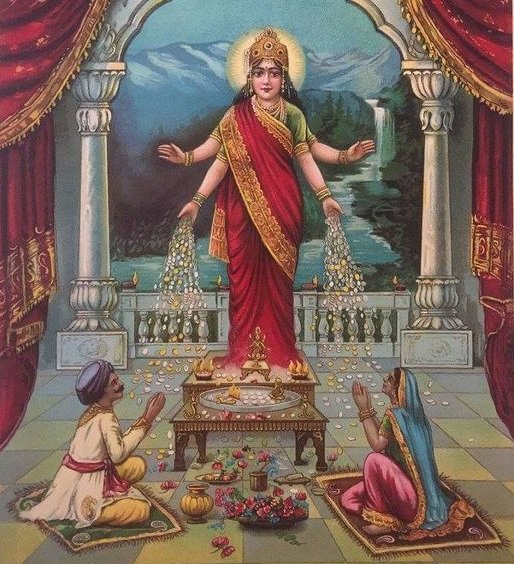
Lalita Ashtottara Shatanamavali is a collection of 108 sacred names of the Divine Mother Lalita.
These names praise different aspects of Devi, including her beauty, compassion, auspicious nature, spiritual greatness and divine relationship with Lord Shiva.
In Namavali Puja, each name becomes a separate expression of reverence. Rather than asking only for one desired outcome, the devotee is invited to remember the many dimensions of the Divine Mother. The worship provides an opportunity to pray for Saubhagya, family welfare, harmony, inner strength and auspicious beginnings.
For householders, this form of Devi worship has a special devotional value because it reminds us that our families, relationships, duties and daily work can all become expressions of worship. During the Anushthana, the 108 sacred names will be recited as part of the traditional worship of Shri Lalita Devi. The deeper teaching: Prosperity becomes more meaningful when accompanied by good relationships, gratitude, harmony and a peaceful mind.
श्रीदेवी खड्गमाला स्तोत्र पारायण एवं पूजन
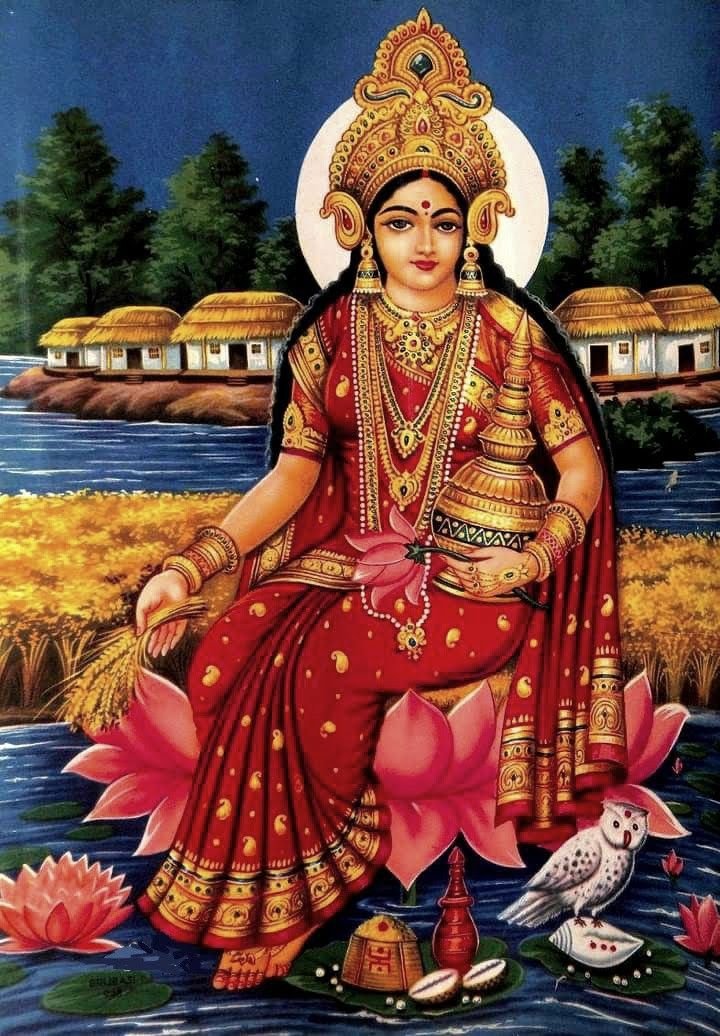
4. Shri Devi Khadgamala — The Sacred Garland of the Shri Chakra
Devi Khadgamala occupies a special place in Shri Vidya worship because of its connection with the deities and Avaranas of Shri Chakra. The word Khadga means sword, while Mala means garland. In the traditional understanding, the name evokes a sacred garland that carries the protective and illuminating symbolism of divine wisdom.
Khadgamala is closely connected with the worship of the nine enclosures of Shri Chakra. The outer enclosures represent the many dimensions of manifestation, while the journey towards the central Bindu expresses an inward movement towards the Divine Mother. For the Upasaka, this is not merely a sequence of names. It becomes a sacred contemplation of Devi's presence through the Shri Chakra.
The Khadgamala tradition is also connected with specialized practices, some of which require initiation and guidance from an authorized Guru.
In this Yagya, the sacred recitation and associated worship will be conducted by the Shri Vidya Upasaka Pandits in accordance with their Parampara. Participants may listen with reverence and meditate on the Divine Mother without undertaking restricted mantra practices themselves. The deeper teaching: Real protection is not merely freedom from external difficulties. It is also the growth of clarity, discipline and wisdom that helps us respond to life's challenges.
Shri Vidya Yagya — When Sacred Mantra Meets the Fire of Agni
In Vedic ritual tradition, Agni holds a very special place. Fire is invoked as the divine messenger through whom offerings are made to the deities. In Yagya, the offering is not limited to the physical substance placed into the fire. The devotee also brings an intention, prayer and willingness to act according to Dharma. The sacred fire therefore becomes a powerful symbol of purification, dedication and transformation.
During this Deepawali Maha Anushthana, the Pandits will perform the worship and the prescribed offerings associated with Shri Suktam and the announced Lalita recitations, following the procedures of their ritual lineage. The ceremony will include Sankalpa, invocation of the Divine Mother, sacred chanting, worship of Shri Chakra and the concluding Purnahuti, according to the final ritual programme.
You do not have to be physically present at the Yagya Sthala. Registered participants can join through Zoom, listen to the chanting and offer their prayers while the Pandits perform the ritual. The Sankalpa will connect the registered devotee's stated prayerful intention with the collective ceremony. The emphasis of this Yagya is traditional worship, sincere devotion and the remembrance of Shri.
Special Sacred Offering: Energized Shri Yantra for Every Participant
Your Shri Yantra Will Be Worshipped During the Deepawali Anushthana
One of the special features of this event is that every registered participant will receive an energized Shri Yantra after the Puja and Yagya.
Shri Yantra, also known as Shri Chakra, is the principal sacred geometric representation used in the worship of Shri Lalita Tripura Sundari.
Its interlocking triangles, surrounding lotus enclosures and central Bindu carry important meanings within the Shri Vidya tradition. The upward and downward triangles are commonly understood through the principles of Shiva and Shakti, while the Bindu represents the supreme centre of worship. In traditional practice, a Shri Yantra is treated as a sacred object of devotion and meditation rather than an ordinary decorative symbol.
For this event, the Shri Yantras intended for the participants will be included in the worship and energized through the Puja and Yagya by the Upasaka Pandits. After the completion of the Anushthana, one such Shri Yantra will be provided to each registered participant.
How Can You Use Your Shri Yantra at Home?
The Shri Yantra may be respectfully placed in a clean and appropriate place of worship in your home, office or personal meditation space. It may become a focus for daily prayer, remembrance of Devi and a few moments of quiet contemplation. Participants who already follow a family Puja tradition or have received Guru Diksha should continue to follow the guidance of their own Guru and Parampara.
The Yantra is not being presented as an object that automatically produces wealth or guarantees a specific result. Its importance lies in its sacred association with Devi worship and the personal devotion maintained by the worshipper.
A sacred reminder of the Deepawali Sankalpa, to remain with you after the Yagya has concluded.
What Will Your Participation Include?
- Live Zoom participation in the Deepawali Shri Vidya Puja and Yagya.
- Shri Suktam Jaap and Homa performed by experienced Vedic Pandits.
- Shri Lalita Trishati, Lalita Ashtottara and Devi Khadgamala recitations and associated worship by Shri Vidya Upasakas.
- Inclusion in the ceremonial Sankalpa using the participant details provided during registration.
- One energized Shri Yantra per registered participant, provided after completion of the Puja and Yagya.
The ceremony will be performed collectively with respect for traditional methods and the guidance of the Pandits' Guru Parampara.
Who Can Participate in This Shri Vidya Mahayagya?
This Anushthana is open to devotees who wish to participate respectfully in the worship of Shri Mahalakshmi and Lalita Tripura Sundari. It is particularly meaningful for householders who wish to begin Deepawali with a sacred Sankalpa, businesspeople and professionals who pray for ethical and stable prosperity, families who value traditional Devi worship, and spiritual seekers who feel devotion towards the Divine Mother.
People who are new to Shri Vidya may also attend. You do not need prior knowledge of Sanskrit, Vedic chanting or Shri Chakra worship to join the online ceremony. The specialized mantra practices remain the responsibility of the qualified Upasaka Pandits.
This programme is a collective religious ceremony, not a Shri Vidya Diksha or an initiation into restricted Tantric mantras.
How Can You Use Your Shri Yantra at Home?
The Shri Yantra may be respectfully placed in a clean and appropriate place of worship in your home, office or personal meditation space. It may become a focus for daily prayer, remembrance of Devi and a few moments of quiet contemplation. Participants who already follow a family Puja tradition or have received Guru Diksha should continue to follow the guidance of their own Guru and Parampara.
The Yantra is not being presented as an object that automatically produces wealth or guarantees a specific result. Its importance lies in its sacred association with Devi worship and the personal devotion maintained by the worshipper.
A sacred reminder of the Deepawali Sankalpa, to remain with you after the Yagya has concluded.
What Will Your Participation Include?
- Live Zoom participation in the Deepawali Shri Vidya Puja and Yagya.
- Shri Suktam Jaap and Homa performed by experienced Vedic Pandits.
- Shri Lalita Trishati, Lalita Ashtottara and Devi Khadgamala recitations and associated worship by Shri Vidya Upasakas.
- Inclusion in the ceremonial Sankalpa using the participant details provided during registration.
- One energized Shri Yantra per registered participant, provided after completion of the Puja and Yagya.
The ceremony will be performed collectively with respect for traditional methods and the guidance of the Pandits' Guru Parampara.
This programme is a collective religious ceremony, not a Shri Vidya Diksha or an initiation into restricted Tantric mantras.
How Will the Online Puja and Yagya Be Conducted?
Reserve your place through the registration page. A maximum of 50 participants will be accepted.
Registered participants will be requested to share their name, Gotra if known, and their prayerful intention or Sankalpa. Other details, such as Rashi and Nakshatra, may be provided if known. These details will be used according to the Sankalpa procedure followed by the Pandits.
The joining details and confirmed programme timings will be shared with registered participants.
You may attend from your home or another peaceful place
During the chanting and Yagya, you may light a lamp safely, sit quietly, listen to the sacred recitations and offer your personal prayers to the Divine Mother.
It is not necessary to perform advanced rituals yourself.
After the completion of the Puja and Yagya, the Shri Yantra dedicated to each registered participant will be provided through the delivery arrangements communicated by the organizers
Why Are We Limiting Registration to 50 Participants?
This is being organized as a focused collective Anushthana rather than an unrestricted public broadcast. We wish to maintain an appropriate arrangement for registration, Sankalpa details, online participation and the Shri Yantra offering for every participant. For this reason, registration will be limited to 50 participants only. Once all 50 places are reserved, registration for this Anushthana will close.
Frequently Asked Questions
1. What is the Deepawali Shri Vidya Mahayagya?
It is a traditional online religious ceremony dedicated to Shri Mahalakshmi and Shri Lalita Tripura Sundari. The Anushthana includes Shri Suktam, Lalita Trishati, Lalita Ashtottara and Devi Khadgamala recitations, together with Yagya and worship conducted by Shri Vidya Upasaka Pandits.
2. Is Shri Vidya initiation required to participate?
No. You may attend the online ceremony as a devotee without receiving Shri Vidya initiation. Mantra practices and ritual procedures that require specialized training or initiation will be performed by the authorized Pandits.
3. Will the Puja be performed in my name?
Registered participants will be included in the collective Sankalpa using the name and other relevant details submitted during registration. This is a group Anushthana rather than an individual, separate Puja for each participant.
4. What if I do not know my Gotra, Rashi or Nakshatra?
You can still register. Share the details you know. The organizers can advise you regarding the remaining Sankalpa information.
5. Will I receive a physical Shri Yantra?
Every registered participant will receive one Shri Yantra after the Puja and Yagya. Delivery arrangements, including destination eligibility and shipping costs, will be communicated during registration.
6. What does an energized Shri Yantra mean?
In the context of this event, it means a Shri Yantra that has been included in the ceremonial worship of the Divine Mother through the Puja and Yagya. This is a traditional religious understanding and should not be confused with a scientifically established guarantee of supernatural or material effects.
7. Can I attend the Yagya from outside India?
The ceremony can be attended through Zoom from any place where the participant has suitable internet access. International Shri Yantra dispatch availability and applicable charges should be confirmed with the organizers before registration.
8. Do I need any Puja materials at home?
No elaborate preparations are needed to watch and participate devotionally. You may keep a clean worship space, flowers or a lamp if you wish and can do so safely.
9. Can I participate for prosperity, family peace or career well-being?
Yes. You may share an appropriate Sankalpa concerning prosperity, family harmony, livelihood, spiritual progress or another constructive intention. The ritual is an expression of prayer and devotion; specific outcomes cannot be guaranteed.
10. Is this the same as ordinary Deepawali Lakshmi Puja?
No. This event combines Shri Suktam worship associated with Shri Mahalakshmi with the Lalita Trishati, Ashtottara and Khadgamala traditions of Lalita Tripura Sundari worship. It is a special collective Anushthana and does not replace your regular family Deepawali Puja.
11. How many participants can join?
Only 50 registered participants will be accepted. This limit has been set for the current event.
12. How will I receive the Zoom link?
The joining instructions will be communicated to registered participants through the contact details provided at registration.