
Guru Purnima 2026: Why Gau Seva Is Considered Guru Seva in the Indian Tradition
Guru Purnima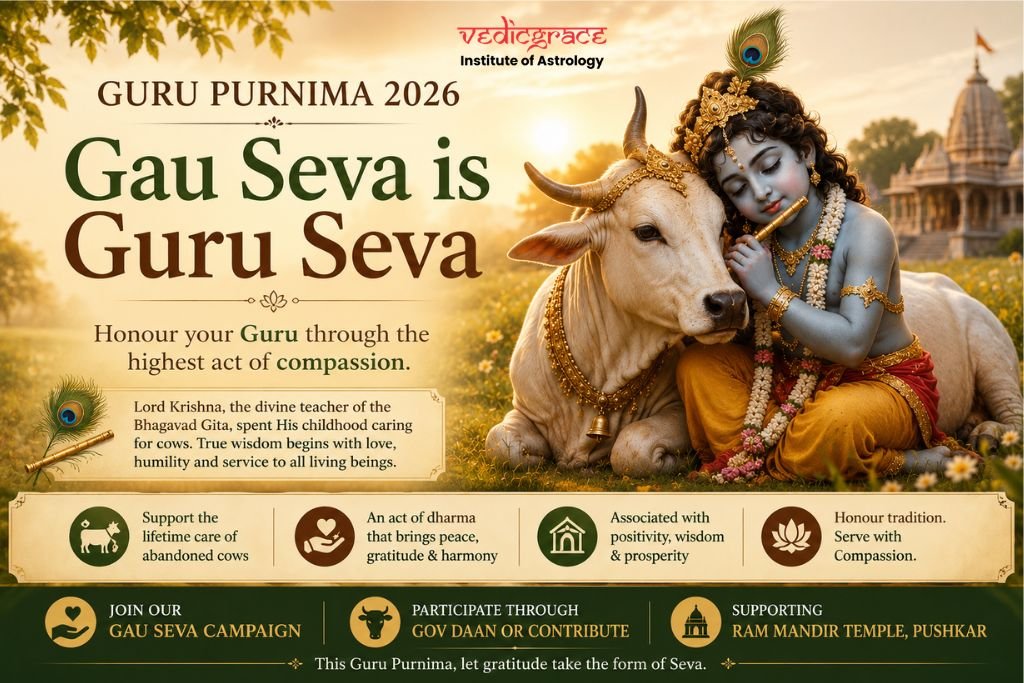
Guru Purnima is one of the most sacred festivals in the Indian spiritual tradition. Celebrated on the full moon (Purnima) of the Ashadha month, it is dedicated to expressing gratitude towards the Guru—the teacher who removes ignorance and guides us toward wisdom.
The word Guru is traditionally understood as one who dispels darkness (Gu meaning darkness and Ru meaning remover). Whether it is a spiritual master, a parent, a teacher, or a mentor, every Guru plays an important role in shaping our lives.
While many people celebrate Guru Purnima by offering flowers, prayers, or Guru Dakshina, the essence of the festival lies in living the values that our Gurus teach us. Compassion, humility, gratitude, discipline, and selfless service are among the highest forms of Guru Dakshina.
One such timeless expression of gratitude is Gau Seva—serving and protecting cows. Across Indian traditions, Gau Seva is regarded as an act of compassion and dharma, making it a meaningful way to celebrate Guru Purnima.
The Sacred Connection Between Lord Krishna and Gau Seva
When we think of Lord Krishna, one of the most beloved images is that of a young cowherd standing beside a beautiful cow, playing His flute in the fields of Vrindavan.
Before becoming the teacher who delivered the timeless wisdom of the Bhagavad Gita, Krishna spent His childhood caring for cows. His names—Gopal, Govinda, and Murlidhar—reflect this deep relationship with cows and nature.
Krishna’s life teaches us that greatness begins with humility.
He did not simply speak about compassion; He lived it. He cared for animals, protected nature, and treated every living being with love and respect.
For devotees, this image carries a profound message:
“Wisdom is not only found in scriptures but also in kindness, service, and compassion toward all living beings.“
This is why Gau Seva continues to hold a special place in Hindu culture and spiritual practice.
Why Is Gau Mata Revered in Indian Tradition?
In Indian culture, the cow has long been regarded as a symbol of nourishment, generosity, and selfless giving.
Without expecting anything in return, she provides nourishment and supports agricultural life. This quality of giving has made the cow an enduring symbol of compassion and abundance.
For centuries, Indian villages have depended on cows for milk, organic farming, and sustainable living. Beyond their practical role, cows are also associated with the values of patience, gentleness, and nurturing—qualities that many spiritual traditions encourage us to cultivate in our own lives.
Because of these associations, serving and protecting cows has traditionally been viewed as an act of gratitude toward nature and society.
Gau Seva in Traditional Jyotish
In traditional Jyotish (Vedic astrology), different aspects of life are symbolically connected with planets, houses, and natural elements.
Many Jyotish practitioners associate Gau Seva with qualities represented by:
Moon (Chandra)
The Moon traditionally represents nourishment, emotional balance, motherhood, and care.
Jupiter (Guru)
Jupiter symbolizes wisdom, dharma, generosity, and the blessings of teachers.
Venus (Shukra)
Venus is associated with comfort, harmony, beauty, and prosperity.
Fourth House
The Fourth House traditionally represents home, peace, family, emotional security, and the nurturing environment in which we live.
Because Gau Seva is connected with compassion, nourishment, and service, many followers of traditional Jyotish consider it a meaningful spiritual practice aligned with these qualities.
It is important to understand that these interpretations come from traditional Jyotish teachings and are followed as part of spiritual and cultural practice.
Gau Seva and Traditional Vastu Beliefs
Traditional Vastu Shastra also places importance on harmony between people, nature, and the spaces they inhabit.
According to traditional beliefs, acts of compassion, cleanliness, and respect for nature help create a peaceful environment at home.
Many households place a cow and calf idol in the Ishanya Kona (Northeast corner) as a symbolic reminder of abundance, wisdom, and harmony.
Similarly, serving cows is regarded by many as an act that nurtures positive intentions, gratitude, and a deeper connection with dharma.
While these practices are rooted in tradition and faith, they continue to inspire millions of people to live more consciously and compassionately.
Why Seva Is Greater Than Ritual
Modern life often encourages us to seek quick solutions.
However, Indian philosophy repeatedly reminds us that inner transformation comes through consistent action rather than shortcuts.
Seva is one of the purest expressions of spirituality because it shifts our attention from ourselves to the well-being of others.
When we feed a hungry person, plant a tree, protect nature, or care for an abandoned animal, we are not merely performing an action—we are cultivating humility, gratitude, and compassion within ourselves.
This is why many Gurus throughout history have emphasized service over ceremony.
A simple act performed with sincerity often carries more meaning than elaborate rituals performed without compassion.
Gau Seva beautifully reflects this principle.
Whether it is providing fodder, supporting medical care, contributing to shelter, or simply helping abandoned cows receive proper care, every act of service becomes an offering made with love rather than expectation.
On Guru Purnima, this spirit of selfless giving becomes even more meaningful because it reflects the very teachings that our Gurus strive to pass on.
In the next section, we will explore how Gov Daan and Gau Seva continue to make a meaningful difference in today’s world, how your contribution supports the care of abandoned cows, and how you can participate in the Vedic Grace Guru Purnima 2026 – Gau Seva is Guru Seva campaign.
The Relevance of Gau Seva in Today’s World
While the spiritual significance of Gau Seva has been celebrated for centuries, its relevance extends far beyond tradition. Today, thousands of abandoned, injured, and elderly cows across India depend on gaushalas for food, shelter, and medical care.
Rapid urbanization, changing agricultural practices, and the abandonment of non-milking cattle have placed immense pressure on many gaushalas. These shelters work tirelessly to provide a safe home for cows that would otherwise struggle to survive.
Supporting a gaushala is therefore not only an act of faith but also an act of compassion and responsibility. Every contribution helps provide nutritious fodder, clean drinking water, veterinary treatment, shelter maintenance, and daily care for these gentle animals.
Guru Purnima reminds us that gratitude should be expressed through action. By supporting Gau Seva, we extend kindness to living beings while preserving a tradition of care that has been part of India’s cultural heritage for generations.
What is Gov Daan?
The Sanskrit word “Gov Daan” refers to offering a cow or contributing towards her care as an act of charity and gratitude.
In earlier times, donating cows was considered one of the most valued gifts because cows supported families through nourishment and agriculture.
Today, Gov Daan has evolved in practical ways. While some people donate cows to institutions capable of caring for them, many choose to contribute towards the lifelong feeding, shelter, rescue, and medical treatment of abandoned cows through trusted gaushalas.
This allows individuals and families to participate in the spirit of Gov Daan while ensuring that the animals receive proper and sustained care.
How Your Contribution Makes a Difference
Every contribution, regardless of its size, directly supports the daily needs of rescued cows.
Your support helps provide:
Nutritious Fodder
Healthy food is essential for the well-being of every rescued cow.
Clean Drinking Water
Proper hydration is a basic necessity, especially during the hot summer months.
Veterinary Care
Many rescued cows require medical treatment, regular check-ups, and rehabilitation after injury or illness.
Safe Shelter
Maintaining clean and secure shelters ensures that cows can live in comfort and dignity.
Daily Care
Dedicated caretakers work every day to feed, clean, monitor, and care for the animals with compassion.
Together, these efforts create a safe environment where abandoned cows can live peacefully and receive the care they deserve.
Guru Purnima 2026 – Gau Seva is Guru Seva
This Guru Purnima, Vedic Grace invites you to become part of a meaningful initiative that combines devotion with compassion.
Our “Gau Seva is Guru Seva” Campaign encourages individuals and families to celebrate Guru Purnima by supporting the lifelong care of abandoned cows.
You may participate through:
- Gov Daan
- Sponsoring nutritious fodder
- Supporting veterinary treatment
- Contributing towards shelter maintenance
- Helping with the daily care of rescued cows
Every contribution is an opportunity to transform gratitude into service.
As part of this campaign, participants may dedicate their seva:
- In their own name
- In their family’s name
- In honour of their Guru
- In loving memory of their parents or ancestors
This simple yet meaningful gesture becomes a beautiful way to celebrate Guru Purnima while contributing to the welfare of living beings.
The proceeds from this initiative also support Ram Mandir Temple, Pushkar, strengthening our shared commitment to dharma, compassion, and community service.
Why Celebrate Guru Purnima Through Seva?
Many people express gratitude through words.
Others express it through rituals.
Seva, however, transforms gratitude into action.
Whether it is feeding a hungry person, planting a tree, supporting a gaushala, or helping someone in need, selfless service reflects the values that Gurus have taught for generations.
When we serve without expecting recognition or reward, we cultivate humility, patience, generosity, and compassion—qualities that enrich not only society but also our own lives.
This is why Guru Purnima is an ideal occasion to choose service as an offering.
Frequently Asked Questions
Can anyone participate in this campaign?
Yes. Individuals, families, students, professionals, business owners, and devotees from India and abroad are welcome to participate.
Can I dedicate my contribution?
Yes. You may dedicate your Gau Seva in your own name, your family’s name, your Guru’s name, or in memory of your ancestors.
How will my contribution be used?
Contributions support the feeding, shelter, veterinary care, and day-to-day maintenance of rescued and abandoned cows in gaushalas, along with supporting the campaign’s charitable initiatives.
Is this only for followers of Jyotish?
No. While the campaign draws inspiration from traditional Indian wisdom, anyone who wishes to support animal welfare, compassion, and community service is welcome to participate.
Why is Guru Purnima considered a meaningful day for Gau Seva?
Guru Purnima is traditionally observed as a day of gratitude towards teachers and spiritual guides. Performing acts of seva on this day is considered a meaningful way to honour their teachings through action.
A Living Expression of Gratitude
The teachings of our Gurus are not limited to books or discourses. They come alive when we practise compassion, humility, and service in our everyday lives.
Gau Seva is one such opportunity.
By supporting the care of abandoned cows, we preserve a tradition that celebrates kindness, responsibility, and respect for all living beings.
This Guru Purnima, let your gratitude become action.
Join the “Gau Seva is Guru Seva” campaign and become part of a collective effort to care for rescued cows while supporting Ram Mandir Temple, Pushkar.
Together, we can celebrate Guru Purnima through seva, compassion, and meaningful action.
Participate Today
Sponsor Gau Seva
Support the lifelong care of abandoned cows
Supporting Ram Mandir Temple, Pushkar
Visit our Guru Purnima Seva Campaign page to learn more and become part of this sacred initiative.


Leave a Comment
Comments are closed for this post.
Be the first to comment on this blog!