Why Choose This Jyotish Foundation course?
Most beginners get stuck in the same two problems:
- They learn many separate concepts: “Rahu in 7th means this, Saturn in 10th means that”, but cannot combine them into one clear reading.
- They never learn time – Dashas, Transits – so everything remains vague.
This course is designed to solve exactly these two issues.
Across 20 modules, you travel through:
- Foundations of Jyotish and Panchāṅga – understanding time, karma and the Vedic view of life
- Rashis, Grahas, Bhavas, Lagna – the basic grammar of the chart
- Nakshatras – the subtle psychological and karmic code behind behaviour
- House-wise Graha placement and House Lords – seeing real life stories in charts
- Dashas and Transits (Gochara) – learning how and when karma actually unfolds
- Yogas and Remedies – identifying powerful patterns and how to nourish or correct them
- Chart Interpretation Labs – putting everything together in real charts
The goal is not to make you a “prediction machine” in nine months. The goal is to make you solid in basics, so that when you later study advanced topics, nothing feels shaky.
You should come out of this like a well-trained first-year Jyotish student in a traditional gurukula – clear on language, steady in approach, humble in attitude.
Curriculum Overview: Step-by-Step Astrology Study for Beginners
Module 1: What is Jyotish? – Light on Time and Karma
- Meaning of Jyotish as “light” on life, time and karma
- Why Jyotish is called the eye of the Vedas
- Difference between real astrology and superstition or fear-based prediction
- Basics of karma, dharma, free will and fate
- Spiritual responsibility and ethics of an astrologer
By the end of this module, students see Jyotish as a sacred guidance system, not as fortune-telling.
Module 2: Panchanga Essentials – The Building Blocks of Time
- Five limbs of Panchanga: Tithi, Vara, Nakshatra, Yoga, Karana
- Lunar calendar and how it shapes mood, energy and events
- Simple idea of Muhurta and choosing supportive timings
- Emotional and energy mapping through daily Panchanga
Students learn to read a basic Panchanga and understand how the day’s quality affects actions and mind.
Module 3: Zodiac Signs – Understanding the 12 Rashis
- Names, symbols and lords of the 12 Rashis
- Rashis as psychological patterns and temperament
- Elements: Fire, Earth, Air, Water
- Modalities: Movable, Fixed, Dual
- How Rashis act as “hosts” and modify planetary behaviour
Students start recognising sign traits in themselves and others and see how Rashis colour each Graha.
Module 4: Planets (Grahas) – Cosmic Actors in the Chart
- Introduction to 9 Grahas: Sun, Moon, Mars, Mercury, Jupiter, Venus, Saturn, Rahu, Ketu
- Psychological, mythological and spiritual meaning of each Graha
- Natural benefic / malefic vs functional benefic / malefic (basic view)
- States like combust, retrograde, direct – what they roughly indicate
Students gain a living feel of each planet as a “personality” acting in the chart.
Module 5: Houses (Bhavas) – The 12 Areas of Life
- The 12 houses as life domains: body, money, siblings, home, children, disease, marriage, death, dharma, career, gains, loss
- Four purposes: Dharma, Artha, Kāma, Moksha
- Special houses – Kendra, Trikona, Dusthana, Upachaya
- Bhavat Bhavam: house-from-house logic
Students learn to connect houses with real life themes like profession, health, marriage, children and spiritual life.
Module 6: Ascendant (Lagna) – The Chart’s Heartbeat
- What is Lagna and why it changes approximately every 2 hours
- Difference between Lagna, Moon sign and Sun sign
- Role of Lagna lord in shaping personality and life path
- Lagna as the main reference point for all prediction
Students can now identify their own Lagna and see how it frames the entire horoscope.
Module 7: Understanding the Chart Format
- North Indian, South Indian and Diamond style charts
- Reading degrees, signs, house numbers and placements
- How to locate Lagna, Grahas and Bhavas in any chart
- Introduction to Chandra Lagna
- Basic use of software like JHora / Parashara Light to generate charts
Students become comfortable looking at a chart and not feeling lost.
Module 8: Introduction to Nakshatras – Lunar DNA
- Overview of 27 Nakshatras and their deities, symbols, animals, varna
- Nakshatra psychology and past-life flavour
- Padas – the four quarters of each Nakshatra
- Role of Moon’s Nakshatra as emotional filter
- How Nakshatras refine Rashi-based reading
Students start seeing how Nakshatras explain emotional patterns and subtle behaviour.
Module 9: Grahas in the 12 Bhavas – Planetary Influence in Life Domains
- Effects of each Graha in each of the 12 houses
- How Sun, Moon, Mars, Mercury, Jupiter, Venus, Saturn, Rahu, Ketu behave in different Bhavas
- Marriage, career, children, finance, health indications through Graha placement
- Shadow and strength patterns for each Graha in Bhavas
Students can do a first-level reading: “Planet X in house Y = such life theme.”
Module 10: House Lords in Different Houses – Inter-House Dynamics
- How to find house lords from Lagna
- Meaning of “1st lord in 10th”, “7th lord in 12th”, “9th lord in 2nd” and so on
- Deeper role of Trikona, Kendra, Dusthana and Upachaya lords
- Bhava-to-Bhava storytelling for complex situations like career change, marriage issues, health patterns
Students learn to combine houses through their lords and read more realistic life stories.
Module 11: Introduction to Dasha System – Timing Karma
- What is a Dasha and why life runs in planetary periods
- Structure of Vimshottari Dasha (120 years)
- Mahadasha, Antardasha, Pratyantar – main actor, support actor, background actor
- How Dashas influence psychology, events, opportunities
- Reading Dasha sequence from birth as life chapters
Students see that charts are not static – time unlocks different karmas at different ages.
Module 12: Deep Dive into Bhavas – Advanced View
- Deeper meaning of Trikona, Kendra, Dusthana and Upachaya
- Functional benefic / malefic logic for different Lagnas (introductory level)
- Bhava-to-Bhava harmony and conflict
- Use of Bhava Kundali vs Rashi Kundali
- Predictive examples using house strength and lordship
Students refine their understanding of houses and start seeing which parts of life are more blessed or challenged.
Module 13: Rashis as Hosts – Planetary Behaviour in Signs
- How each planet changes expression in each Rashi
- Friend / enemy / neutral sign concepts and their impact
- Elements and modalities in prediction (fire, earth, air, water; movable, fixed, dual)
- Rashi Drishti – how signs “see” each other
- Practical comparison cases: e.g. Mars in Cancer vs Mars in Aries
Students begin to judge planetary strength not only by house, but also by sign.
Module 14: Planetary Conditions – Retrograde, Combustion, War and Dignity
- Retrograde planets as internalised or delayed karmas
- Combust planets and ego overshadowing that Graha
- Graha Yuddha (planetary war) – which planet wins and what it implies
- Exaltation, debilitation, mooltrikona – true meaning beyond keywords
- Planetary friendships and enmities (permanent and temporary)
- Planetary maturity ages and their impact on life events
Students gain tools to judge whether a planet is actually able to deliver its promise.
Module 15: Dasha System in Prediction – Practical Application
- Using Mahadasha + Antardasha to time events
- Dasha themes for career, marriage, health, education, finance
- Simple methods to cross-check Dasha results with house ownership and placement
- Dasha activation of Yogas – when good combinations actually start working
- 5–10 minute practical Dasha interpretation flow
Students move from theory to actually saying “During this period, these kinds of events are likely.”
Module 16: Transits (Gochara) & Ashtakavarga – Real-Time Astrology
- Basics of transits: how moving planets colour the present
- Major role of Saturn, Jupiter, Rahu-Ketu transits
- Transit rules from Lagna, Moon sign and Moon Nakshatra
- Simple introduction to Sarvashtakavarga & Bhinashtakavarga
- Double Transit logic and major event windows
- Combining Transit with Dasha
Students can start observing current transits in their own life and linking them with running Dashas.
Module 17: Basics of Remedies – Aligning with Graha Energy
- Why remedies work when done with understanding and sincerity
- Types of remedies: mantra, dāna, fasting, pūjā, seva, colour, lifestyle
- Planet-specific remedy lines (Sun to Ketu – basic level)
- House-based remedies: strengthening weak domains like health, marriage, finance
- Matching remedies to Dasha / Transit windows
- Ethics: no fear, no blind promises, “do no harm” principle
Students learn to suggest small, practical, dharmic remedies rather than dramatic or fear-based ones.
Module 18: Yogas – Blessings and Challenges in the Chart
- Introduction to important Yogas: Rajyoga, Dhanayoga, Gajakesari, Viparita Raja Yoga etc.
- Challenging Yogas: Grahan Yoga, Kemadruma, Arishta, Daridra etc.
- When a Yoga is active and when it stays dormant
- Role of Dashas and Transits in Yoga activation
- Real examples where Yogas gave big rise or major fall
Students stop treating Yogas as magic words and learn to see their actual working in time.
Module 19: Chart Interpretation Lab – Synthesis & Practice
- A step-by-step reading framework: Lagna → Rashis → Grahas → Bhavas → Lords → Dasha → Transit → Remedies
- Reading personality, relationships, career, health, finance from one chart
- Lagna-based vs Moon-based viewpoints
- Case studies (anonymous charts)
- Student readings with teacher correction
Students practice putting everything together into a clear, grounded reading.
Module 20: Capstone Integration – Becoming a Jyotish Practitioner (Level 1)
- How to prepare before reading a chart
- How to structure a 30–45 minute reading for a real person
- How to speak predictions with humility, clarity and responsibility
- Common beginner mistakes and how to avoid them
- 5-minute quick-scan method for any horoscope
- Orientation for next steps: Divisional charts, Prashna, Nadi, Astro-Vastu, Medical, Mundane etc.
Students complete the course with enough foundation to start reading charts responsibly and to enter advanced study.
Learning Outcomes: Structured Astrology Learning for Beginners
By the end of the Astrology Beginner Course, a sincere student will be able to:
- Read and understand a North / South Indian chart layout
Identify Lagna, Grahas, Rashis and Bhavas correctly, without confusion. - Explain the basic nature of each Rashi and Graha in simple language
For example: “Mars in Cancer in 10th for this Lagna will show emotional anger pattern at work and struggle to express initiative under authority.” - Interpret the 12 Bhavas as life areas
Talk meaningfully about family, career, wealth, health, marriage, children, spiritual life etc. based on house strength and lordship. - Use Panchāṅga elements for day-to-day understanding
See how Tithi, Vara, Nakshatra, Yoga, Karana influence moods, events and Muhurta choices. - Read planets in houses (Grahas in Bhavas)
For example: Jupiter in 2nd vs in 8th, Venus in 4th vs in 12th – what it does for money, happiness, relationships and health. - Understand House Lords in different houses
Predict combinations like “10th lord in 6th”, “7th lord in 12th”, “9th lord in 2nd” etc. and connect with real-life events like job change, foreign travel, marriage style. - Work with Vimshottari Dasha basics
Identify Mahadasha and Antardasha, understand what kind of life chapter is active, and cross-check with past events. - Overlay simple Transit rules on Dasha
Combine Saturn, Jupiter and Rahu-Ketu transits with current Dasha to estimate important windows for change. - Recognise major Yogas and their likely impact
See Rajyoga, Dhanayoga, Viparita Raja Yoga, Grahana and Kemadruma etc. and understand when they can actually give result. - Suggest basic, ethical remedies
Simple mantra, dāna, discipline and lifestyle alignments for weak areas without fear, superstition or exploitation. - Do a short reading for friends and family
Sit with a chart and in 10–15 minutes explain personality, key strengths and challenges, upcoming 1–2 year trends, and a basic remedy line.
Who Should Join this Astrology Beginners Classes?
This course is suitable for anyone interested in learning astrology.
Pre-Requisites for this Astrology Basic Course
This course is aimed at serious beginners, not casual timepass.
- No prior astrology knowledge is required.
- Basic comfort with English and simple school-level mathematics (addition, dates, etc.) is enough.
- You should be able to join online sessions and use simple tools like Zoom/Telegram/Google Drive.
- Most important, you need regularity – showing up to class, doing assignments, and revising at least a little every week.
If you are already an intermediate student, this course will still help you fix foundation gaps and clean up wrong concepts.
Assessment & Certification for Astrology Beginners Training
To maintain a serious study environment, the course follows a simple but clear assessment process:
- Module-wise Quizzes
Small objective/subjective quizzes at the end of selected modules (e.g. after Rashis, Grahas, Bhavas, Dasha, Transits) to check understanding. - Weekly Assignment Review
Chart assignments are periodically reviewed. You receive feedback on:- Clarity of Lagna-Rashi-Graha reading
- Logical flow from Bhava to Dasha to Transit
- Remedy suggestions
- Mid-Course Checkpoint
A mid-course test after around 10 modules to see if you can handle a basic chart reading end-to-end. - Final Capstone Case Study
- One or two complete charts given at the end of the course
- You prepare a written or recorded reading: personality, life themes, 5-year outlook, and remedies
- Faculty evaluates and gives comments
- Certification Criteria
Certificate is awarded to students who:- Attend the minimum required number of classes (live or via recording as per policy)
- Submit key assignments and the final capstone
- Show basic ability to interpret a chart without major conceptual errors
There is no “pass/fail” in a school sense. The certificate indicates that you have completed and engaged with the course properly.
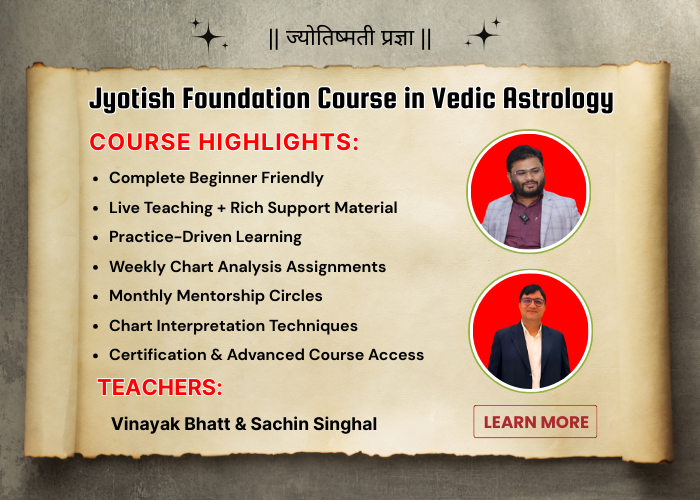
Your Instructors for this Astrology Basic Course
Vinayak Bhatt
- Practising Vedic and Nadi astrologer, teacher and author
- Known for his work in Bhrigu Nandi Nadi, Prashna, Stock Market Astrology, Astro-Vāstu, Ayur Jyotish and Remedies
- Has taught thousands of students across the world through structured online courses
- Strong focus on clarity, directness and practical application of Jyotish in modern life
- In this beginner course, he sets the overall framework, method of chart reading and remedy philosophy
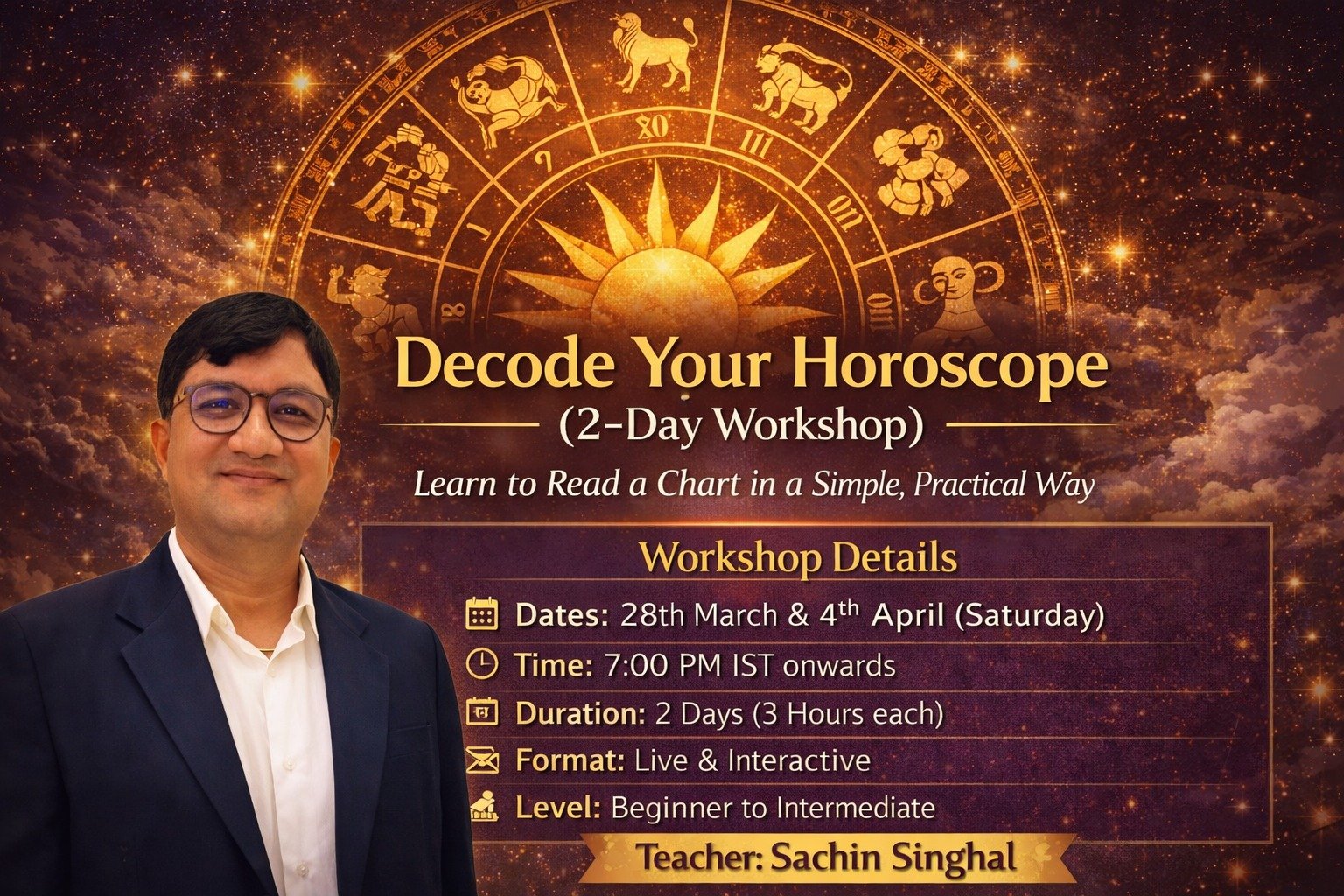
Sachin Singhal
- Practising astrologer and teacher associated with the Vedicgrace ecosystem
- Special interest in foundation teaching, dashas and practical examples
- Known for his patient, step-by-step explanation style, very helpful for beginners
- Handles many of the core modules, assignments and doubt-clearing so students develop confidence in basics
Both teachers work together to ensure that even a student who starts from zero can gradually move toward independent reading of charts.